
As the days shorten and the landscape outside turns muted and still, the character of a home shifts. Winter brings an invitation to reconsider not just how our spaces look, but how they feel when daylight gives way to long, dark evenings.
In a world often dominated by harsh overhead lighting and bright seasonal displays, true luxury lies in restraint. Creating a sanctuary for the colder months isn't about covering surfaces in temporary decor—it is about mastering the subtle play of warm light, shadow, and texture.
Lowering the Visual Horizon
When daylight fades early, relying on high, central ceiling lights can make a room feel stark and clinical. Winter calls for a lower lighting horizon.
Positioning warm-toned lamps at eye level—or lower—draws the focus down and creates small pockets of intimacy within a room. Think alabaster table lamps glowing softly in quiet corners, unlacquered brass picture lights casting down-light on textured walls, or floor lamps tucked near deep velvet armchair seating. By leaving parts of the room in gentle shadow, the space immediately feels larger, warmer, and more dramatic.
The Elemental Draw of Real Flame
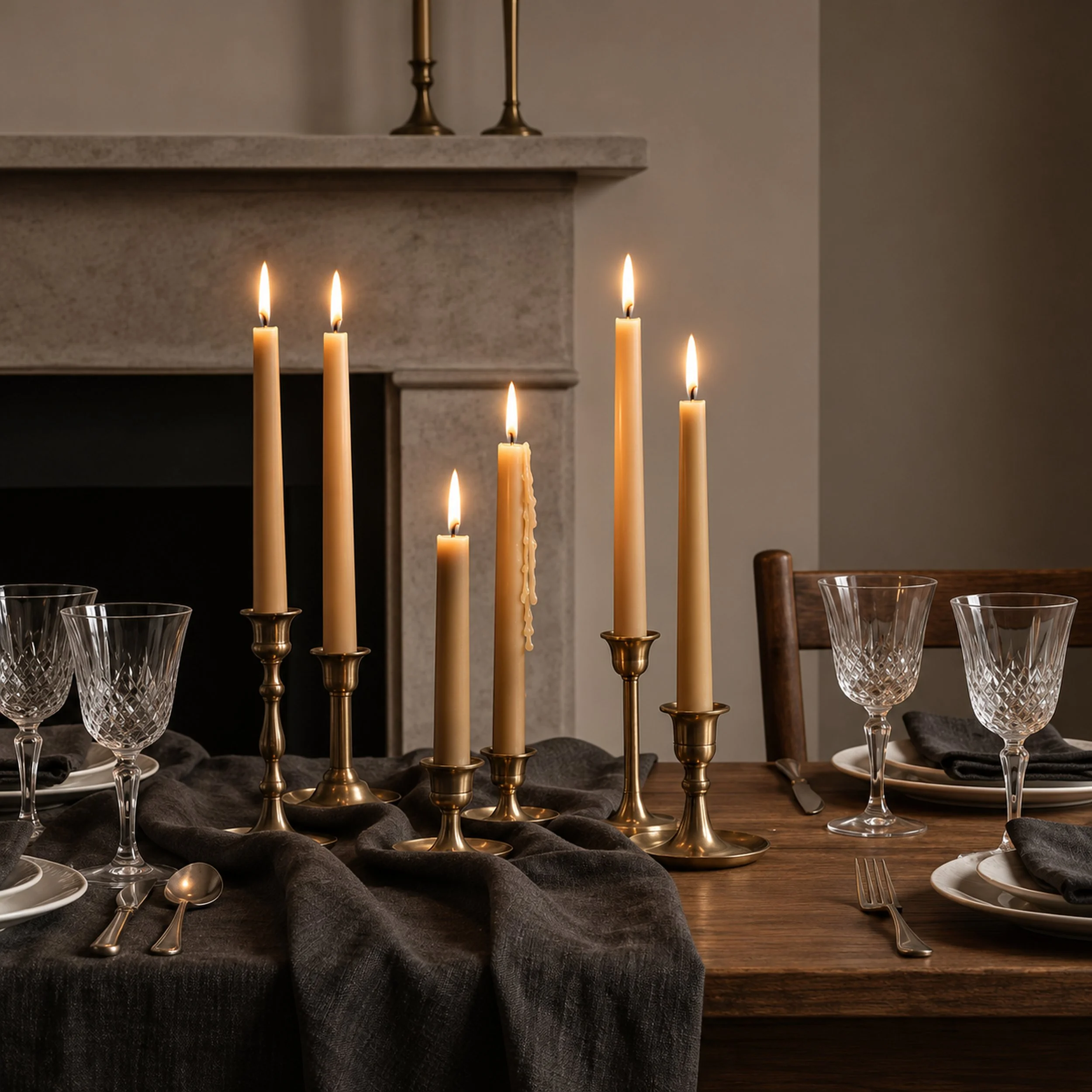
There is an unmatched purity to natural flame that no artificial light can replicate. The soft, living flicker of taper candles introduces movement and depth to static architecture.
Instead of grand centrepiece arrangements, consider clustering tall, hand-poured beeswax or ivory tapers in varying heights across a stone mantelpiece, a dark wood dining table, or a window sill. The warm reflection off polished timber, honed marble, or aged glassware creates a rich, painterly atmosphere that feels both festive and timeless.
Tactile Depth in the Dark
Light needs texture to lean against. In the low glow of winter illumination, smooth and shiny surfaces can feel cold,whereas raw, tactile materials absorb and diffuse light beautifully.
Introducing heavy woven wools, slubby Belgian linens, deep pile rugs, and dark timber brings a grounded warmth to minimalist interiors. As evening light hits these organic surfaces, it highlights their natural variations, bringing an understated richness to the quietest rooms in the house.
How do you approach lighting in your home during the winter months?